Introduction Choosing the right PVC foam board thickness is essential for achieving the desired balance of strength, weight, durability, and cost. Different thicknesses offer different performance characteristics, making them suitable for a wide range of applications, from signage and displays to furniture, cabinets, and interior decoration.
PVC foam board thickness affects several key factors, including overall weight, rigidity, ease of fabrication, and load-bearing performance. Thinner boards are generally lightweight and easier to handle, while thicker boards typically provide greater rigidity and support for applications that require more structural stability.
In this guide, we’ll explore common PVC foam board thicknesses, explain how thickness influences performance, and help you choose the right option based on your project requirements and intended application.
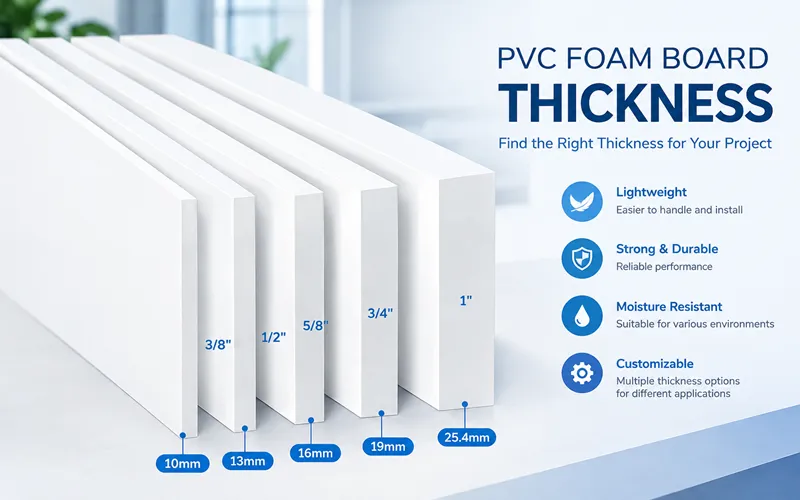
What Is PVC Foam Board Thickness? PVC foam board thickness refers to the distance between the two opposite surfaces of a board. It is an important specification that helps determine the board’s rigidity, weight, handling characteristics, and suitability for different applications. Selecting the appropriate thickness ensures that the board meets the functional and performance requirements of a project.
PVC foam board thickness is commonly measured in millimeters (mm) or inches . For example, a 5 mm board is relatively thin and lightweight, making it suitable for certain signage and decorative applications. A 10 mm or 18 mm board provides greater thickness and may be more suitable for furniture components, cabinet panels, and interior decoration, depending on the required strength and density.
It is also important to distinguish between thickness, density, and overall dimensions:
Thickness: The distance between the two surfaces of the board, usually measured in millimeters or inches. It influences rigidity, weight per unit area, and fabrication requirements.
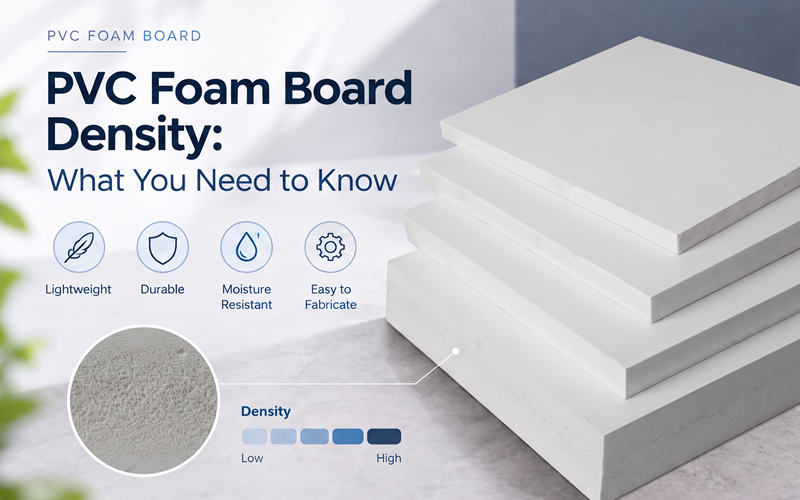
Density: The mass of the material per unit volume, commonly expressed in kg/m³. Density affects the board’s weight, strength, and other performance characteristics, even when two boards have the same thickness.
Overall dimensions: The board’s length and width, which determine its total surface area and how much material is available for a project.
Understanding these three specifications makes it easier to compare PVC foam boards and select the right product. The ideal thickness depends not only on the intended application but also on the board’s density, required rigidity, processing method, and installation conditions.
Common PVC Foam Board Thicknesses PVC foam board is available in a range of thicknesses to meet different requirements for weight, rigidity, fabrication, and application. Thinner boards are generally suitable for lightweight signage and decorative projects, while thicker boards are often preferred for furniture components, cabinet panels, and applications that require greater rigidity.
The following table outlines common PVC foam board thicknesses and their typical applications.
These thickness options provide a general starting point for choosing PVC foam board. However, the most suitable thickness depends on factors such as board density, panel dimensions, installation conditions, and the level of rigidity required. A thicker board does not automatically guarantee better performance in every application, so it is important to consider the material’s overall specifications.
Note: The thicknesses and applications listed above are general examples. Actual availability and suitability may vary by manufacturer, product grade, and production specifications. Confirm the available options with your supplier before placing an order.
How Does Thickness Affect PVC Foam Board Performance? PVC foam board thickness plays an important role in determining the board’s rigidity, weight, fabrication requirements, and overall cost. Choosing the right thickness helps ensure that the material meets the functional requirements of a project without adding unnecessary weight or expense. Below are the main factors to consider when selecting PVC foam board thickness.
Strength and Rigidity Thickness directly affects the bending resistance and rigidity of PVC foam board. In general, thicker boards provide greater resistance to bending than thinner boards made from the same material under comparable conditions. This makes them suitable for applications that require better shape retention and support.
Panel size is another important consideration. Larger panels may be more likely to bend or deflect, particularly when they span wide distances without sufficient support. In these situations, a thicker board may help improve rigidity. However, the appropriate thickness also depends on board density, load conditions, support spacing, and the intended use.
For furniture panels, cabinet components, and other applications requiring greater stability, consider both the board thickness and the installation design before making a selection.
Weight The thickness of PVC foam board affects its weight when the length, width, and density remain the same. A thicker board contains more material per unit of surface area and will generally weigh more than a thinner board of the same size.
For projects involving large panels, transportation, or frequent handling, a thinner board may offer advantages by reducing overall weight. However, selecting a board based on weight alone may not provide sufficient rigidity for the intended application.
The key is to balance weight requirements with the necessary strength and stability. Consider the panel dimensions, installation conditions, and expected use to determine the most appropriate thickness.
Cutting and Machining PVC foam board can be processed using various fabrication methods, including cutting, drilling, routing, and CNC machining. The required processing method should be considered when choosing the board thickness.
Thinner boards are often easier to cut and handle for lightweight signs, displays, and decorative panels. Thicker boards may be more suitable for furniture components and applications that require deeper machining or more substantial panel sections.
For CNC routing, drilling, and other precision operations, the board must have sufficient thickness for the required machining depth and final product design. Tool selection, feed settings, board density, and machining quality can also affect the results.
Before production, confirm that the selected thickness is compatible with your fabrication equipment, machining requirements, and finished product specifications.
Cost PVC foam board thickness can influence material consumption, product weight, transportation costs, and the overall project budget. For boards with the same length, width, and density, increasing thickness generally increases the material volume and weight. As a result, thicker boards may have a higher material cost per panel.
However, the lowest-cost option is not always the most economical choice. A board that is too thin may not provide the rigidity required for a particular application, while an unnecessarily thick board can increase material usage and handling costs without providing meaningful benefits.
To achieve a practical balance between performance and cost, select PVC foam board thickness according to the actual application requirements. Consider the required rigidity, panel dimensions, machining process, installation conditions, and expected service life before finalizing your specification.
How to Choose the Right PVC Foam Board Thickness for Different Applications Choosing the right PVC foam board thickness depends on how the material will be used, the size of the finished panel, and the performance required. Different applications have different needs for rigidity, weight, durability, and installation. By considering these factors alongside board density and construction, you can select a thickness that meets your project requirements without unnecessary material costs.
For Signage and Advertising For signage and advertising
For larger signs or displays that require greater rigidity, an 8 mm or thicker board may be worth considering, depending on the panel dimensions and mounting method. Boards used for outdoor signage should also be evaluated for weather exposure, wind loads, and installation conditions.
When selecting a thickness, consider the sign’s size, whether it will be mounted on a wall or supported by a frame, and how frequently it will be handled or transported.
For Furniture and Cabinets Furniture and cabinet
The appropriate thickness depends on the panel size, expected load, hardware installation, and support structure. Larger panels or components that need to maintain their shape may require a thicker board or additional support. The suitability of the board for screws, hinges, and other fasteners should also be confirmed for the intended design.
Thickness should not be considered in isolation. Board density, foam structure, and overall product quality also affect rigidity and mechanical performance. Before production, check the manufacturer’s specifications to ensure the selected board is suitable for the intended furniture or cabinet application.
For Interior Decoration PVC foam board is used in various interior decoration
Thinner boards may be appropriate for lightweight decorative elements or applications where the panels are securely supported. Thicker boards can be considered when greater rigidity or a more substantial panel is required, provided the mounting system can accommodate the additional weight.
When choosing a thickness, consider the finished surface, cutting and fabrication requirements, installation conditions, and expected durability. For ceiling applications or elevated panels, ensure that the board and fixing system are suitable for overhead installation and comply with applicable safety requirements.
For Construction Applications For construction-related applications
Thicker boards may offer greater rigidity, particularly for larger panels or installations with wider support spacing. However, thickness alone does not establish whether a board is suitable for a specific construction purpose. Density, material properties, fixing methods, environmental exposure, and expected loads must also be considered.
Before specifying PVC foam board for a construction project, consult the manufacturer’s technical data and confirm that the product meets the relevant performance requirements. Do not assume that standard PVC foam board is suitable for load-bearing or structural applications unless it has been specifically designed and verified for that use.
PVC Foam Board Thickness Chart by Application Selecting PVC foam board thickness becomes easier when you compare common applications and their typical thickness ranges. The chart below provides a quick reference for choosing a suitable starting point based on the intended use, required rigidity, and fabrication needs.
Factors to Consider Before Choosing PVC Foam Board Thickness Choosing the right PVC foam board thickness involves more than simply selecting a thicker or thinner panel. You need to consider the intended application, board dimensions, required rigidity, density, installation method, and budget. Evaluating these factors together helps you select a board that delivers the right balance of performance, weight, and cost.
Intended Application Start by identifying how the PVC foam board will be used. Lightweight signage and display panels may require thinner boards, while furniture components, cabinet panels, and applications requiring greater rigidity may need thicker options. The intended use determines the performance requirements and helps narrow down the available thicknesses.
Board Length and Width The overall dimensions of a board influence its stability. Larger panels may be more susceptible to bending or deflection, especially when they have limited support. If you are working with wide cabinet panels, large decorative boards, or oversized displays, consider whether a thicker board or additional support is needed.
Required Rigidity and Strength Consider how much rigidity the finished product needs and whether it will be exposed to loads, pressure, or repeated handling. Thicker boards generally offer greater bending resistance when other material properties and conditions are comparable. However, thickness alone does not determine strength, so check the manufacturer’s technical specifications for demanding applications.
Board Density Density affects the weight and mechanical properties of PVC foam board. Two boards with the same thickness may perform differently if their densities or foam structures differ. When selecting a board, evaluate thickness and density together to achieve the required balance of rigidity, weight, and processability.
Installation and Support Method The installation method can influence the thickness you need. Boards attached to a continuous backing may have different requirements from panels mounted on a frame with widely spaced supports. Consider the fixing method, support spacing, panel orientation, and hardware compatibility before finalizing your selection.
Cutting and Machining Requirements If your project involves cutting, drilling, routing, or CNC machining, choose a thickness that accommodates the required fabrication process and finished design. Consider machining depth, edge quality, dimensional tolerances, and the capabilities of your equipment. For complex components, confirm the recommended processing conditions with your manufacturer.
Weight Limitations Thicker PVC foam boards generally weigh more than thinner boards of the same length and width when their density is the same. If the project has strict weight limits, such as lightweight displays or large decorative panels, evaluate whether a thinner board can meet the performance requirements. Also consider handling, transportation, and installation constraints.
Budget and Customization Needs Your budget should account for more than the initial price of the board. Thickness can affect material consumption, shipping weight, machining costs, and installation expenses. If standard thicknesses do not meet your requirements, ask the manufacturer about available customized options. Compare specifications and total project costs to avoid paying for thickness or performance that your application does not need.
Can PVC Foam Board Thickness Be Customized? Yes, PVC foam board thickness can often be customized to meet specific project requirements, depending on the manufacturer’s production capabilities and available specifications. While standard thicknesses are suitable for many common applications, some projects require particular dimensions, density levels, or performance characteristics that may call for customized production.
In addition to thickness, manufacturers may offer customized board
Before placing a custom order, confirm the following details with your supplier:
Thickness range and tolerances: Check the available thickness options and acceptable dimensional variations to ensure consistent product specifications.
Board density: Confirm the required density and foam structure, as these affect weight, rigidity, and processing performance.
Board dimensions: Specify the required length and width, along with any cutting or sizing requirements.
Application suitability: Explain the intended use so the manufacturer can recommend an appropriate combination of thickness, density, and material properties.
Production requirements: Ask about minimum order quantities (MOQ), sample availability, production lead times, and customization costs.
Working closely with your PVC foam board manufacturer helps ensure that the customized product meets your technical requirements and production needs. Before starting large-scale production, request samples or technical data when appropriate to verify that the selected specifications are suitable for your application.
Conclusion Choosing the right PVC foam board thickness is essential for achieving the desired balance of rigidity, weight, fabrication performance, and cost. The best option depends on the intended application, board dimensions, density, installation method, and required mechanical properties.
Thinner boards are often suitable for lightweight signage, displays, and decorative panels, while thicker boards may be more appropriate for selected furniture components, cabinet panels, and applications that require greater rigidity. However, thickness should always be evaluated alongside density and overall product specifications to ensure the board meets your project requirements.
Before placing an order, consult your manufacturer to confirm available thicknesses, dimensional tolerances, technical specifications, and customization options.
Looking for the right PVC foam board thickness for your project? Contact us for product specifications, samples, and customized solutions.