Introduction Choosing the right PVC foam board manufacturer is essential to ensuring consistent product quality, reliable supply, and long-term cooperation. However, buyers may face challenges such as inconsistent board quality, limited customization options, unstable production capacity, and unreliable delivery schedules. These issues can affect project performance, production efficiency, and overall costs.
To make the right decision, it is important to evaluate a manufacturer’s production capabilities, product quality, customization options, industry experience, and delivery reliability. This guide outlines the key factors to consider when selecting a reliable PVC foam board manufacturer for your business needs.
Check the Manufacturer’s Product Quality Product quality is one of the most important factors when choosing a reliable PVC foam board manufacturer. Consistent quality ensures that the boards meet your project requirements and perform reliably in different applications. Before placing an order, pay attention to the following aspects.
Material Consistency A reliable manufacturer should maintain consistent board density, thickness, and dimensions across different production batches. Variations in these specifications may affect product performance, processing efficiency, and final product quality. Ask the manufacturer for detailed product specifications and acceptable tolerances to ensure the boards meet your requirements.
Surface Quality Surface quality is important, especially for applications involving printing, laminating, or decorative finishing. Check whether the board has a smooth, uniform surface without visible defects, uneven textures, or other imperfections. A consistent surface helps ensure better results in further processing and finishing.
Physical Performance Evaluate the physical properties of PVC foam board according to your intended application. Key factors include rigidity, weight, moisture resistance, and machining performance. For example, furniture and cabinet applications may require greater rigidity, while signage and display applications may prioritize lightweight construction and easy fabrication.
Request product samples before placing a bulk order. Testing samples allows you to check the actual quality, processing performance, and suitability of the boards for your specific requirements.
Evaluate Production Capacity and Manufacturing Experience A manufacturer’s production capacity and industry experience directly affect its ability to fulfill orders consistently and meet your business requirements. Choosing a supplier with suitable manufacturing facilities and proven experience can help reduce production delays and ensure a stable long-term supply.
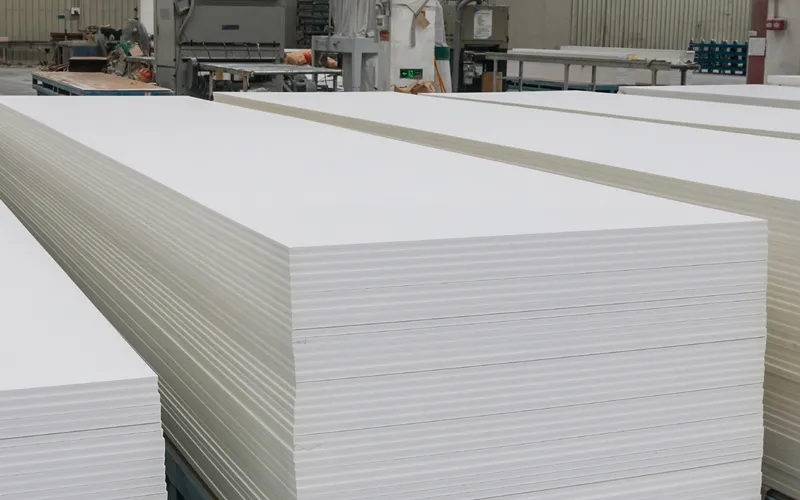
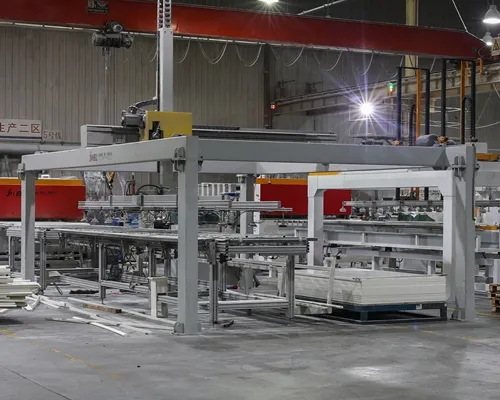
Manufacturing Equipment and Facilities Check whether the manufacturer has modern production equipment, well-organized manufacturing facilities, and appropriate quality control processes. These factors can influence production efficiency and product consistency. Make sure its equipment and manufacturing capabilities can meet your required PVC foam board specifications, including thickness, density, dimensions, and surface finishes.
Production Capacity Production capacity is another important factor to consider, especially for bulk purchases and long-term cooperation. Ask about the manufacturer’s daily or monthly output, typical production lead times, and ability to handle repeat orders. A reliable supplier should have sufficient capacity to support your expected purchasing schedule and respond to changes in order volume without compromising product quality.
Industry Experience An experienced PVC foam board manufacturer is more likely to understand different application requirements and provide suitable product solutions. Review its product range, manufacturing history, and experience serving customers in industries such as construction, advertising, furniture, and interior decoration. You can also check previous projects and customer references to better understand its technical capabilities and reliability.
Check Available PVC Foam Board Specifications Before choosing a PVC foam board manufacturer, make sure its product specifications match your application requirements. Different projects may require different board thicknesses, densities, dimensions, and performance characteristics. A manufacturer offering a wide range of specifications can provide greater flexibility for different applications.
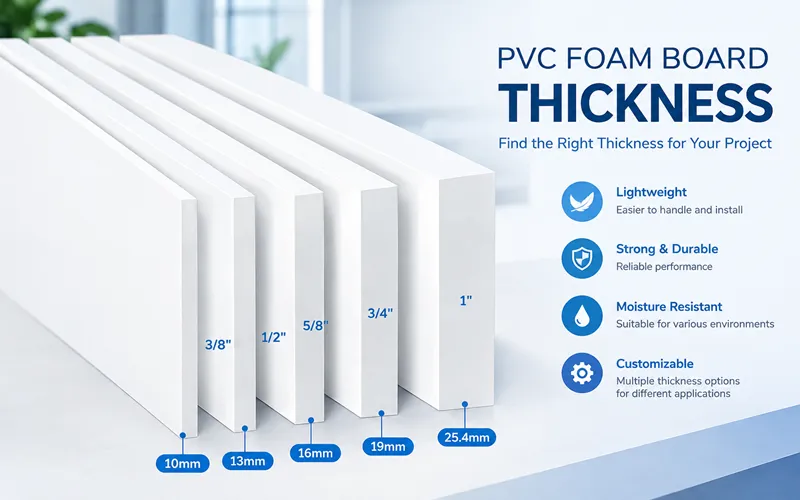
Thickness and Dimensions Check the available board thicknesses, standard dimensions, and dimensional tolerances. Common PVC foam board thicknesses range from thin sheets for signage and decoration to thicker boards for furniture and cabinet applications. Confirm whether the manufacturer’s standard sizes meet your project requirements and whether custom dimensions are available when needed.
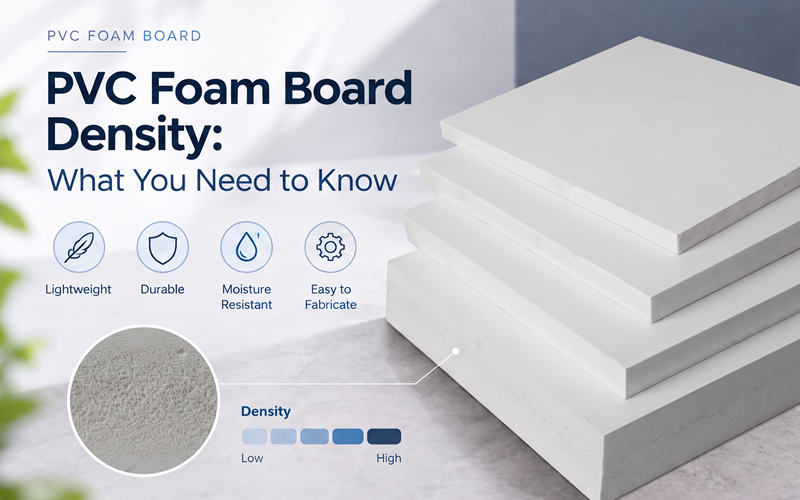
Density and Board Performance Ask about the available density options and their corresponding physical properties. Density can influence board weight, rigidity, and overall performance. Lower-density boards are generally suitable for lightweight applications, while higher-density boards may offer greater rigidity for furniture and other demanding uses. However, the right choice should also consider board thickness, processing methods, and specific application requirements rather than density alone.
Product Applications Check whether the manufacturer supplies PVC foam boards suitable for your intended applications, such as signage, furniture components, cabinet panels, interior decoration, and decorative wall panels. A manufacturer with experience across different industries is more likely to understand specific application requirements and recommend appropriate product specifications.
Look for Customization and OEM Services Customization capabilities are important when your business requires PVC foam boards with specific dimensions, colors, or surface finishes. A manufacturer offering flexible customization and OEM services can help you meet different project requirements and develop products that better fit your market needs.
Custom Sizes and Thicknesses Check whether the manufacturer can produce PVC foam boards in custom sizes and thicknesses beyond its standard specifications. Different applications may require specific dimensions or thickness levels. A flexible manufacturer should be able to discuss your requirements and provide suitable production solutions.
Custom Colors and Surface Finishes Ask about available color options and surface finishing services. Depending on your application, you may need customized colors, smooth or textured surfaces, or other finishing options. Make sure the manufacturer can provide consistent colors and surface quality across production batches.
OEM and Bulk Orders If you are a distributor, brand owner, or large-volume buyer, check whether the manufacturer supports OEM services and bulk production. Discuss requirements such as product specifications, private labeling, customized packaging, and order quantities. It is also important to confirm whether the supplier can maintain consistent quality and reliable delivery for repeat orders.
Review Quality Control and Certifications A reliable PVC foam board manufacturer should have clear quality control procedures and provide relevant documentation to demonstrate product quality. Proper quality management helps ensure consistent product performance, reduce defects, and meet customer expectations. Before choosing a supplier, consider the following aspects.
Quality Control Procedures Ask how the manufacturer inspects raw materials, monitors production processes, and checks finished PVC foam boards. Quality inspections should cover key specifications such as thickness, density, dimensions, surface quality, and physical properties. You can also request product specifications, quality inspection reports, and production records to understand how the manufacturer maintains consistent quality across different batches.
Relevant Certifications and Test Reports Check whether the manufacturer can provide relevant certifications and product test reports when required. For example, ISO 9001 demonstrates that a company has implemented a quality management system, while ISO 14001 relates to environmental management. Depending on the destination market and intended application, buyers may also request RoHS test reports for restricted substances, REACH compliance documentation for chemical safety requirements, or CE marking where applicable under relevant EU regulations.
For specific applications, additional test reports covering properties such as fire performance, impact resistance, or weather resistance may also be necessary. Always verify that certificates and test reports are authentic, up to date, and applicable to the actual product and manufacturer you intend to work with.
Compare Pricing, MOQ, and Delivery Time Price, minimum order quantity (MOQ), and delivery time are important factors when selecting a PVC foam board manufacturer. Comparing these details helps you estimate the total purchasing cost, manage inventory, and avoid unexpected delays. Consider the following points before making a purchasing decision.
Request a Detailed Quotation Request detailed quotations from multiple manufacturers and compare them based on the same product specifications. Pay attention to board thickness, density, dimensions, order quantity, packaging, and shipping terms. Also, check whether additional costs, such as customized production, packaging, or transportation, are included. Avoid choosing a supplier based on the lowest price alone, as product quality and overall service are equally important.
Total Cost Comparison Checklist
Before comparing quotations, make sure you consider all major purchasing costs:
Product Cost: Unit price based on board specifications, density, thickness, and order quantity.
Customization Cost: Additional charges for custom sizes, colors, surface finishes, or OEM services.
Packaging Cost: Costs for protective packaging, pallets, labeling, and customized packaging.
Shipping Cost: Freight charges, insurance, and other transportation expenses.
Import Duties and Taxes: Applicable customs duties, taxes, and clearance fees in the destination market.
Additional Charges: Sample fees, inspection fees, or other potential costs.
Comparing these items helps you understand the total landed cost and identify the supplier offering the best overall value.
Understand Minimum Order Quantity Confirm the manufacturer’s minimum order quantity (MOQ) before placing an order. MOQ requirements may vary depending on product specifications, custom colors, surface finishes, and production arrangements. If you are a new buyer or want to evaluate product quality first, ask whether sample orders or small trial orders are available.
Confirm Production and Shipping Schedules Ask about the estimated production lead time and confirm whether the manufacturer can meet your required delivery schedule. You should also discuss order scheduling, packaging methods, loading arrangements, and available shipping terms. A reliable supplier should provide clear delivery estimates and communicate promptly about any potential delays, helping you plan inventory and manage your supply chain more effectively.
Evaluate Communication and After-Sales Support Good communication and reliable after-sales support are essential for building a long-term relationship with a PVC foam board manufacturer. A professional supplier should not only provide quality products but also offer timely assistance throughout the purchasing process and after delivery.
When evaluating a manufacturer, consider the following aspects:
Response Time and Clarity: Check whether the supplier responds promptly, provides clear product information, and answers your questions professionally.
Technical Support: Confirm whether the manufacturer understands your technical requirements and can provide guidance on product specifications, material selection, and customization options.
Problem Resolution: Ask how the supplier handles product defects, quality complaints, damaged shipments, and other issues after delivery. Clarify the process for reporting problems and requesting solutions.
Long-Term Cooperation: Find out whether the manufacturer can support repeat orders, maintain consistent product specifications, and provide ongoing assistance as your business needs change.
A responsive manufacturer with reliable after-sales support can help reduce communication problems, resolve potential issues more efficiently, and build a more stable long-term supply relationship.
PVC Foam Board Supplier Evaluation Checklist Before making your final decision, use the following checklist to compare potential manufacturers. It covers the key factors that can affect product quality, purchasing costs, and long-term cooperation.
Final Tip: Do not rely on quotations or marketing claims alone. Request product samples, verify relevant documents, and compare multiple manufacturers using the same criteria before placing a bulk order. This will help you identify a reliable PVC foam board supplier that meets your quality, budget, and delivery requirements.
Request Samples Before Placing a Bulk Order Requesting samples is an important step before committing to a large purchase. It allows you to evaluate the actual product quality and confirm whether the PVC foam board meets your project requirements. Even if a manufacturer provides detailed specifications and test reports, physical samples can help you make a more informed purchasing decision.
When evaluating samples, consider the following aspects:
Check Dimensions and Thickness: Measure the sample to verify its dimensions, thickness, and dimensional consistency against the manufacturer’s specifications.
Evaluate Surface Quality: Inspect the board for smoothness, uniformity, and visible defects. Check whether the surface is suitable for printing, laminating, or other finishing processes.
Test Machining Performance: Try cutting, drilling, routing, or other processing methods relevant to your application to evaluate the board’s workability.
Test Application Performance: Evaluate the board under conditions similar to its intended use, such as furniture fabrication, signage production, or interior decoration.
Once the sample meets your expectations, confirm all final specifications, including density, thickness, dimensions, color, and surface finish, with the manufacturer before approving mass production. This step helps minimize misunderstandings, reduce quality risks, and ensure that bulk orders match the approved sample.
Why Work with an Experienced PVC Foam Board Manufacturer? Working with an experienced PVC foam board manufacturer can bring greater consistency, flexibility, and reliability to your supply chain. Beyond product quality, an established manufacturer can provide manufacturing expertise, customized solutions, and technical support to help meet different project requirements.
Here are some key advantages of working with Potentech:
Consistent Product Specifications With over 20 years of manufacturing experience, Potentech specializes in PVC foam boards and PVC mouldings. Its manufacturing processes include raw material inspection, production monitoring, and finished product testing to help maintain consistent product quality across different batches.
Reliable Production Planning Potentech operates more than 32 production lines and reports a monthly production capacity of 3,000 tons. This manufacturing capacity supports bulk orders and helps provide a stable supply for distributors, wholesalers, and industrial customers.
Flexible Customization Options Potentech provides OEM and ODM services to meet different customer requirements. Available customization options include board thickness, density, dimensions, colors, and surface finishes. Additional processing services, such as cutting, drilling, lamination, and edge finishing, are also available.
Technical Support for Product Selection Different applications require different board specifications. Potentech’s sales and engineering teams can help customers evaluate their requirements and recommend suitable PVC foam board solutions based on thickness, density, surface finish, and intended application. Customized samples can also be arranged for evaluation before bulk production.
More Efficient Communication and Order Coordination From initial inquiries and product selection to sample confirmation, mass production, quality inspection, and delivery, Potentech follows a structured order process. This helps customers communicate their requirements clearly, confirm product specifications before production, and coordinate orders more efficiently.
Choosing an experienced manufacturer is not just about purchasing PVC foam boards. It is about finding a reliable production partner that can support your business with consistent quality, flexible manufacturing, and long-term cooperation.
Conclusion Choosing a reliable PVC foam board manufacturer involves more than comparing product prices. Buyers should carefully evaluate product quality, production capacity, available specifications, customization capabilities, quality control procedures, delivery reliability, and after-sales support. These factors help determine whether a supplier can consistently meet your requirements and support long-term cooperation.
Before placing a bulk order, request product samples, verify relevant certifications, and confirm all specifications, pricing, and delivery arrangements. Taking these steps can help reduce purchasing risks and ensure you choose a manufacturer that matches your technical requirements and business needs.
Looking for a reliable PVC foam board manufacturer? Contact Potentech for product specifications, samples, and customized solutions.